Drive breakthrough ideas through responsible AI
Set clear expectations and foster confidence with the AI Usage Classification™
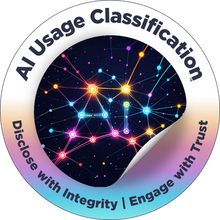
Set clear expectations and foster confidence with the AI Usage Classification™
Like nutrition labels, AIUC badges reveal the level of Human-AI collaboration for any content created, backed by an industry Code of Practice.
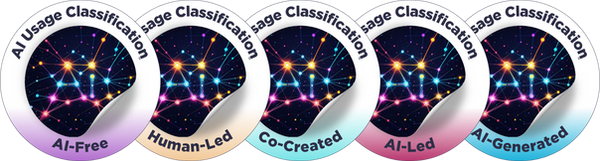
A simple, non-judgmental framework. Five clear classifications. Universal adoption. AIUC is the standard that turns AI transparency from a compliance burden into a trust-building asset.
Learn More about the StandardAI Usage Classifications help organisations identify where and how AI is used in their business. Visibility helps teams improve what they do, avoids misuse and supports responsible delivery with confidence.
Learn MoreIn an environment where audiences increasingly question authenticity, letting people know how much AI has been used strengthens your brand, and prevents backlash across galleries and platforms.
Learn MoreThe AIUC standard gives regulators, associations and peak bodies a straightforward way to define and communicate what responsible AI use looks like for their industry or members, supporting clear expectations and consistent disclosure.
Learn MoreAI Usage Classification™ Adopters











Distributing AI risk management across the organisation, and enabling robust governance across all AI-driven activities.
Although many assume that AI is in use everywhere, individuals and organisations found to be using it without disclosure have faced significant criticism. Nuanced disclosure not only avoids overstating the originality of something created with AI, but also recognises the scale of human judgement and input.
Global regulatory frameworks demand disclosure but lack clear guidance on how to deliver it. Adopting AI Usage Classifications not only fills the gap with minimal internal investment, but organisations also benefit from public reinforcement of the practice to drive consistent and compliant behaviour.
Although AI has come a long way, its reliability in providing situationally aware content, unbiased analytics and secure code is still being tested. Transparent classification ensures that both internally and externally, appropriate levels of diligence are being applied over created artefacts, content, and products.
Introducing the AI Usage Classification™ - your window into responsible AI usage governance.
Our experience with AIUC has encouraged meaningful collaboration across our teams and reinforced the importance of accountability in how AI is used. It represents forward thinking innovation, grounded in integrity.Anita Pages-Oliver, CEO - Sense Recruitment
The team at AIUC care deeply about the impact of AI on society, business and the lives of individuals. We need clarity as users and consumers of AI and AI content. We need easy to understand best practices for adopting AI and AIUC make it happen.Cam Alliot, CEO - The Growth Engine
AIUC is easy to understand and use in our daily work. We get it, our clients get it and the system makes sense. I recommend all creative and consulting companies review the product.Cate Rocchi, Managing Director - Perth Media
Artificial Intelligence is shaping how we work, learn, and make decisions, but much of the conversation is still driven by hype. This session cuts through the noise.
Read more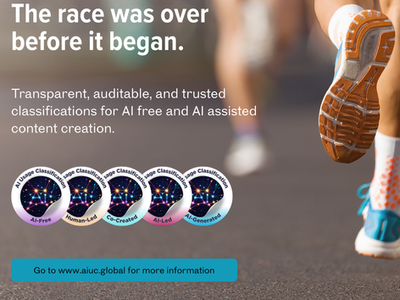
Whilst the world is racing to create a recognisable AI-Free logo, AIUC Global has already gone beyond the finishing line with a cross industry standard.
Read more
UWA Sets a New Benchmark for Student AI Usage Policy in Australian Higher Education.
Read more LinkedIn